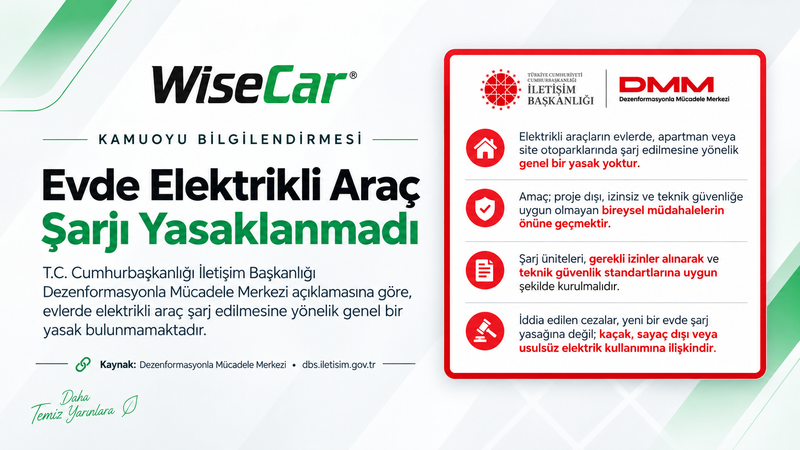
In der Türkei war 2024 jedes zehnte verkaufte Neufahrzeug elektrisch. Laut den Daten des Verbands der Automobilimporteure (ODD) wurden in der Türkei von Januar bis Dezember 2024 über 47.000 reine Elektro- und Plug-in-Hybridfahrzeuge verkauft. In diesem schnell wachsenden Markt wird die Wahl des richtigen Ladegeräts zur wichtigsten Entscheidung für Besitzer eines Elektroautos.
In diesem Ratgeber behandeln wir ausführlich die Arten von Ladegeräten, die Leistungsoptionen, die Installationsanforderungen sowie die Besonderheiten, die speziell in der Türkei zu beachten sind.
Welche Arten von Ladegeräten für Elektroautos gibt es?
Ladegeräte werden grundsätzlich in drei Kategorien unterteilt: tragbare Ladegeräte nach Mode 1/2, AC-Wandladestationen (Wallboxen) nach Mode 3 und DC-Schnellladestationen. Für die Nutzung zu Hause und am Arbeitsplatz sind AC-Wallboxen nach Mode 3 die optimale Lösung – sie sind sowohl sicher als auch kosteneffizient.
| Typ | Leistung | Dauer (60 kWh) | Einsatz | Kosten |
|---|---|---|---|---|
| Tragbar (Mode 2) | 2,3 – 7,4 kW | 8–26 Stunden | Notfall/Reise | Niedrig |
| AC-Wallbox (Mode 3) | 7,4 – 22 kW | 3–8 Stunden | Zuhause/Büro/Parkplatz | Mittel |
| DC-Schnellladen (Mode 4) | 50 – 350 kW | 15–45 Minuten | Öffentliche Ladestation | Hoch |
Empfehlung: Für durchschnittliche türkische Fahrer, die nachts zu Hause laden, ist eine AC-Wallbox mit 7,4–11 kW mehr als ausreichend. 22 kW sind ideal für Nutzer, deren Batterie dreiphasiges Laden unterstützt und die mehr als einmal täglich laden müssen.
Welche Ladeleistung ist die richtige für mich?
Die Wahl der richtigen Leistung hängt von drei Faktoren ab: der maximalen OBC-Leistung (On-Board Charger), die Ihr Fahrzeug unterstützt, der Anzahl der Phasen Ihrer Hausinstallation und Ihrem täglichen Ladebedarf.
OBC-Leistungen von Fahrzeugen (Beispiele 2024)
| Fahrzeugmodell | Max. AC-Ladeleistung | Empfohlenes WiseCar-Modell |
|---|---|---|
| Tesla Model 3 (Europa) | 11 kW | WTP 22kW / WTA 22 kW |
| Togg T10X | 22 kW | WTP 22 kW / WTA 22 kW |
| Volkswagen ID.4 | 11 kW | WTP3 22 kW / WTA 22 kW |
| Hyundai IONIQ 6 | 11 kW | WTP3 22 kW / WTA 22 kW |
| BMW i4 | 11 kW | WTP3 22 kW / WTA 22 kW |
| Renault Zoe | 22 kW | WTP3 22 kW / WTA 22 kW |
| Fiat 500e | 11 kW | WTP3 22 kW / WTA 22 kW |
| Kia EV6 | 11 kW | WTP3 22 kW / WTA 22 kW |
Hinweis: Ein Ladegerät mit höherer Kapazität als die OBC-Leistung Ihres Fahrzeugs bringt in der Praxis keinen Vorteil; das Fahrzeug lädt bis zur Grenze seines eigenen OBC. Wenn Sie jedoch künftig einen Fahrzeugwechsel planen, kann ein 22-kW-Gerät eine sinnvolle Investition sein.
Einphasig oder dreiphasig?
In älteren Gebäuden in der Türkei gibt es überwiegend einphasige Elektroinstallationen (230 V, 50 Hz). Mit diesen Installationen ist ein Laden mit maximal 7,4 kW möglich. In Gebäuden, die nach 2010 errichtet wurden, sind dreiphasige Installationen (400 V) verbreitet; hier kann mit 11 kW oder 22 kW geladen werden.
Für einphasige Installationen empfehlen wir WiseCar WTP2 -7.4kW oder WTP1 -3.5kW; für dreiphasige Installationen WiseCar WTP3 22 oder WTA 22.
Wie lange dauert die Installation eines Heimladegeräts und was kostet sie?
Eine Standard-Installation zu Hause wird von einem autorisierten Elektriker in durchschnittlich 2–4 Stunden abgeschlossen. Die Installationskosten hängen von der Kabellänge, dem aktuellen Zustand der Installation und der Qualität der verwendeten Materialien ab. In der Türkei liegen die Kosten für eine Standard-Installation zu Hause zwischen 7.000 und 20.000 TL.
Faktoren, die die Installationskosten beeinflussen
- Kabellänge: Je größer der Abstand zwischen Verteilerkasten und Ladepunkt, desto höher die Kabelkosten
- Kabelquerschnitt: Dreiphasige 22-kW-Anschlüsse erfordern Kabel mit 5x6 mm² oder mehr
- Bestehende Installation: Eine fehlende Erdung oder ein veralteter Verteilerkasten können zusätzliche Kosten verursachen
- RCD (Fehlerstromschutzschalter): Gemäß IEC 61851 vorgeschrieben; ohne passenden Verteilerkasten fallen Zusatzkosten an
Vorteile der WiseCar-Ladegeräte
WiseCar bietet mit in der Türkei hergestellten, CE-zertifizierten AC-Ladegeräten verschiedene Vorteile gegenüber importierten Produkten:
| Merkmal | WiseCar | Typisches Importprodukt |
|---|---|---|
| Sprache des technischen Supports | Türkisch | Meist Englisch |
| Ersatzteilversorgung | Aus der Türkei, schnell | Monate durch Auslandsbestellung |
| Servicenetz | Türkeiweites autorisiertes Netz | Keines oder begrenzt |
| CE-Zertifikat | Ja | Unterschiedlich (bitte prüfen) |
| Garantie | 2 Jahre | 1–2 Jahre (unterschiedlich) |
| Inländische F&E | Mit Sitz in Kayseri | Nein |
| WiseCar AI | Sprachbefehle, KI-Empfehlungen | Nein |
EV-Ladestatistiken in der Türkei (2024–2025)
Die Daten zu Elektrofahrzeugen und Ladeinfrastruktur in der Türkei wachsen rasant:
- Gesamtzahl der Elektrofahrzeuge in der Türkei: Ende 2024 rund 120.000 (Daten von ODD und SHGM)
- Verkäufe von Elektrofahrzeugen im Jahr 2024: 9,7 % aller Fahrzeugverkäufe (ODD)
- Ziel der Türkei für Elektrofahrzeuge bis 2030: 30 % der Gesamtflotte (Prognose des Energieministeriums)
- EV-Marktdurchdringung in Europa (2024): 18,5 % (ACEA)
- Verteilung der täglichen Ladevorgänge eines durchschnittlichen E-Auto-Fahrers: 80 % zu Hause, 15 % am Arbeitsplatz, 5 % öffentlich (EV Study, EPDK)
- Kostenvorteil des Ladens zu Hause gegenüber öffentlichem Laden: mit Nachttarif 40–60 % günstiger
Worauf Sie beim Kauf eines Ladegeräts achten sollten
Nutzen Sie diese Checkliste für die richtige Wahl:
- Prüfen Sie die OBC-Leistung Ihres Fahrzeugs – sie steht im Handbuch des Fahrzeugs
- Ermitteln Sie die Phasenanzahl Ihrer Installation – einphasig oder dreiphasig?
- Erdungsprüfung – ist keine Erdung vorhanden, muss sie vor der Installation nachgerüstet werden
- Wählen Sie ein Gerät mit CE-Kennzeichnung – nicht zertifizierte Produkte stellen ein Sicherheitsrisiko dar
- Messen Sie die Kabellänge – für die Wahl des passenden Kabelquerschnitts
- IP-Schutzart – im Außenbereich mindestens IP54
- Erkundigen Sie sich nach einem inländischen Servicenetz – im Störungsfall ist schneller Support entscheidend
- Intelligente Funktionen – Nachttarif-Steuerung, Fernsteuerung,
Fazit
Die EV-Ladeinfrastruktur in der Türkei entwickelt sich rasch weiter. Die Wahl des richtigen Ladegeräts erhöht den Komfort im Alltag und schützt zugleich die Gesundheit der Batterie. Als WiseCar begleiten wir Sie mit unseren in der Türkei hergestellten, CE-zertifizierten Ladegeräten mit 2 Jahren Garantie auf Ihrem Weg in die Elektromobilität.
→ WiseCar-Modelle und Preise ansehen
→ Häufig gestellte Fragen lesen
→ Installationsratgeber ansehen